
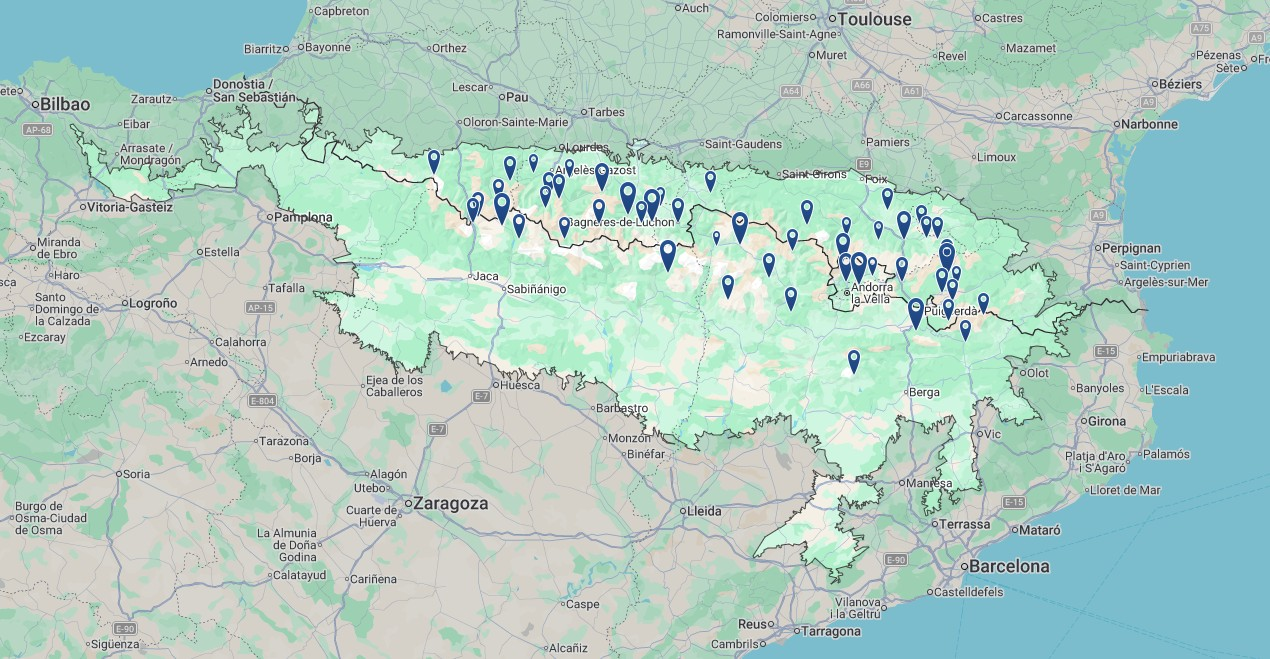
Pyrenees Ski Map Download 👇
Pyrenees Piste Map and Overview
The Pyrenees offer a fantastic blend of scenic beauty, varied terrain, and a more relaxed atmosphere compared to the Alps, making them a top choice for skiers and snowboarders of all levels. Stretching along the border between France and Spain, this mountain range is home to well-developed resorts like Grandvalira and Baqueira-Beret, where you’ll find everything from wide-open groomed runs to challenging off-piste areas. The region’s charm lies in its balance—modern lifts and facilities paired with quieter slopes and stunning, uncrowded landscapes.
Another reason the Pyrenees stand out is value for money. Lift passes, accommodation, and food are often more affordable than in bigger Alpine resorts, yet the quality remains impressively high. Add in a mix of cultural influences – from French alpine villages to Spanish tapas culture – and you get a ski trip that feels both adventurous and welcoming. Whether you’re carving down long cruisy runs or exploring snow parks, the Pyrenees deliver a well-rounded winter sports experience.
Total ski area: 210 km / 130 miles
Base elevation: 1,710 m / 5,610 ft
Peak elevation: 2,640 m / 8,661 ft
Difficulty:
🟦 31% Easy
🟥 53% Intermediate
⬛ 16% Advanced
Ski Season Length and Dates
The ski season in the Pyrenees typically runs from early December through to mid-April, depending on snowfall and resort altitude. Higher resorts like Grandvalira often open in late November during good snow years and can stay open into April, thanks to snowmaking facilities and favorable conditions. While the season may be slightly shorter than the highest Alpine resorts, it still offers a solid four to five months of reliable skiing and snowboarding.
Is it good for beginners?
Yes, the Pyrenees are an excellent choice for beginners. Many resorts in the region are known for their wide, gentle slopes and well-designed beginner zones, making it easier to build confidence. Resorts like Grandvalira in particular have dedicated learning areas, English-speaking instructors, and plenty of green and blue runs. The quieter slopes also mean less pressure and more space to practice, which is ideal if you’re just starting out.